Politics
Chamisa Returns with Agenda 2026: A Political Reset or a New Frontline Battle?
By Staff Reporter | 24 January 2026
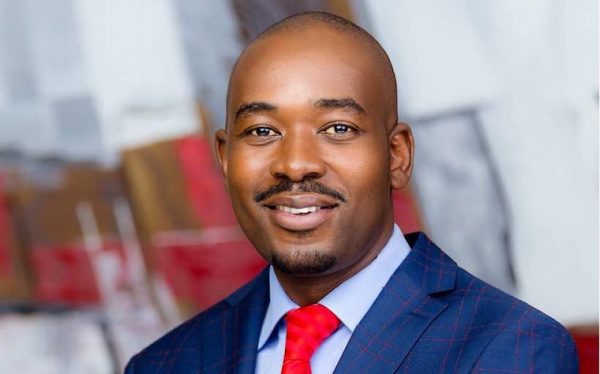
Citizens Leader and former opposition figure Advocate Nelson Chamisa has officially returned to frontline politics, unveiling “Agenda 2026 – A Fresh Start”, a sweeping renewal plan he says is aimed at resetting Zimbabwe’s political, economic, and moral direction.
The announcement marks Chamisa’s most definitive re-entry into the national conversation since his political withdrawal, and it immediately reshapes Zimbabwe’s already tense political landscape.
Speaking to supporters and the broader nation, Chamisa framed his return not as a personal comeback, but as a citizen-driven national renewal project designed to unite Zimbabweans at home and in the diaspora around ethical leadership, constitutionalism, and shared prosperity.
A Response to Deepening Crisis
Chamisa’s return comes at a moment of deep economic hardship, political uncertainty, and institutional fragility. He argued that more than four decades after independence, Zimbabwe has yet to deliver dignity, opportunity, and inclusive development for its people.
According to the Citizens leader, the country is trapped in a governance and legitimacy crisis, marked by disputed national processes, state capture, corruption, and the erosion of public trust.
He described a political environment characterised by rigged elections, intolerance, and shrinking civic space, warning that citizens are increasingly treated as subjects rather than rights-bearing participants in national life.
Diaspora, Youth, and Citizen Power
A notable feature of Agenda 2026 is its strong emphasis on citizen agency. Chamisa stressed that real transformation cannot be imposed from elite politics alone, but must be built and defended by an organised, conscious, and mobilised citizenry.
He highlighted the struggles of Zimbabweans in the diaspora, many of whom face harassment, detention, and exclusion despite their economic contribution to the country. Chamisa called for their full recognition as stakeholders in Zimbabwe’s future.
Youth empowerment also sits at the centre of the agenda, with commitments to skills development, leadership training, and civic education aimed at preparing young people to drive national renewal.
From Opposition to Government-in-Waiting
Significantly, Chamisa announced a shift from traditional opposition politics to a governance-focused posture. He said the Citizens movement is preparing itself as a government-in-waiting, prioritising competence, policy readiness, and institutional rebuilding.
This includes identifying professional talent, building governance teams, and developing credible economic and institutional alternatives capable of stabilising the country “from day one.”
Agenda 2026 also calls for a moral and ethical revival, urging churches, traditional leaders, and civic institutions to play a central role in restoring national values such as integrity, service, accountability, and compassion.
What This Means for Zimbabwean Politics
Chamisa’s return is not just symbolic — it fundamentally alters Zimbabwe’s political equation.
Firstly, it re-energises opposition politics, which in recent years has appeared fragmented and subdued. His re-entry consolidates a political alternative at a time when many citizens feel politically homeless.
Secondly, Agenda 2026 directly challenges the ruling establishment’s Vision 2030 narrative and ongoing term-extension debates. By framing 2026 as a moment of national reset, Chamisa implicitly contests attempts to normalise extended incumbency, delayed reforms, and governance by continuity rather than consent.
In this sense, his return introduces political pressure against any effort to stretch constitutional timelines, re-opening national debate on legitimacy, succession, and the future direction of the state.
Thirdly, his focus on citizen mobilisation rather than elite bargaining signals a potential shift in how political power is contested — from courtrooms and party headquarters to communities, workplaces, campuses, and civic spaces.
A Defining Moment Ahead
Chamisa has indicated that the next 180 days will be dedicated to legal and institutional fortification, grassroots organisation, and building national consciousness. Whether Agenda 2026 evolves into a mass movement or remains an aspirational framework will depend on its ability to translate rhetoric into structure, discipline, and sustained mobilisation.
What is clear is this: Nelson Chamisa’s return has reopened Zimbabwe’s political contest.
As debates around governance, legitimacy, and leadership intensify — particularly in the context of long-term rule and constitutional boundaries — Agenda 2026 positions itself as a direct counter-vision to the status quo.
The coming months will reveal whether this “fresh start” becomes a turning point in Zimbabwean politics, or simply another chapter in the country’s long struggle for democratic renewal.
One thing, however, is no longer in doubt: the political silence has been broken.