Crime and Courts
Details In Mafume, Mashayamombe’s Arrest

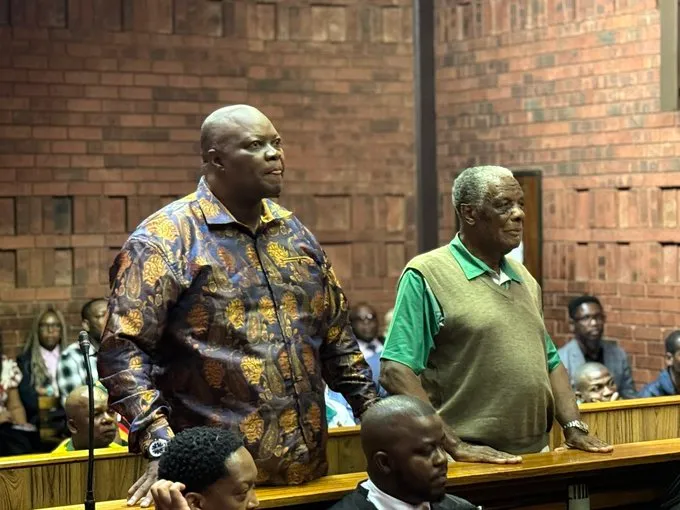
By Crime and Courts Reporter-The Zimbabwe Anti-Corruption Commission (Zimbabwe Anti-Corruption Commission) has confirmed the arrest of Harare Mayor Jacob Mafume, Deputy Mayor Councillor Rosemary Muronda, and former Harare South Member of Parliament Shadreck Mashayamombe on allegations of fraud linked to the illegal sale of council-owned land.
ZACC said the trio is accused of participating in a scheme involving the fraudulent disposal of municipal land. While the commission has not yet disclosed full particulars of the transactions, it confirmed that investigations are ongoing and that the suspects are expected to appear in court once charges are formally laid.
The arrests, carried out on Tuesday, have reignited scrutiny of long-running political and governance scandals stretching back nearly a decade.
Although ZACC has not publicly detailed the charges, the arrests come against the backdrop of Mashayamombe’s controversial political history during ZANU-PF’s bitter G-40–Lacoste factional battles and Mafume’s recent entanglement with findings of the Harare Commission of Inquiry.
Mashayamombe rose to prominence during the height of the G-40 faction, which was aligned to the late former president Robert Mugabe and opposed to the Lacoste faction linked to President Emmerson Mnangagwa. As ZANU-PF youth league secretary for administration and a close ally of then Higher Education minister Jonathan Moyo, Mashayamombe became one of the most visible faces of the G-40 political project.
At the peak of the factional conflict between 2016 and 2017, Mashayamombe was accused by party rivals and critics of orchestrating violent youth mobilisation, intimidating Lacoste-aligned officials, and driving aggressive propaganda campaigns aimed at blocking Mnangagwa’s ascent. He publicly pledged loyalty to Mugabe just days before the November 2017 military intervention that ended Mugabe’s 37-year rule.
Following the coup, Mashayamombe was arrested and charged with subversion for allegedly convening meetings to incite violence and undermine state authority. He spent several months on remand before the case collapsed, mirroring the fate of many high-profile post-coup prosecutions. Although politically marginalised thereafter, he has remained influential in Harare’s informal power networks, particularly around land, transport and municipal affairs.
Mafume’s arrest comes amid mounting pressure over his conduct during and after the Harare Commission of Inquiry, established by Mnangagwa to investigate corruption, abuse of office and financial mismanagement at Harare City Council.
The commission heard damning testimony implicating Mafume in questionable land allocations, alleged interference in procurement processes and political meddling in the administration of the capital. He was accused of exerting undue influence over senior council officials, presiding over a culture of impunity, and failing to account for lucrative land deals involving politically exposed individuals.
Despite the adverse findings, no immediate criminal prosecutions followed, fuelling public concern over selective accountability.
The simultaneous arrest of Mashayamombe and Mafume has prompted speculation that investigators are revisiting long-standing cases involving political violence, land corruption and the capture of urban governance structures by powerful, cross-party networks.
Analysts say Mashayamombe’s arrest revives unresolved questions from the G-40–Lacoste conflict, while Mafume’s detention suggests the Harare Commission of Inquiry may finally be translating into criminal investigations after months of apparent inertia.
ZACC has not indicated whether the arrests are directly linked or whether additional suspects are being sought.
As Zimbabweans await further details, critics caution that past experience shows many high-profile arrests fail to result in convictions, reinforcing perceptions that anti-corruption drives are sometimes deployed selectively during moments of political realignment rather than as part of a consistent rule-of-law agenda.